
Season 2 Guide
The Best Guide to Last War Season 2 Week 1: Polar Storm Mechanics, Tips, and Tasks
A complete Last War Season 2 Week 1 guide covering Polar Storm basics, Coal and Titanium Alloy farming, High-heat Furnace priorities, blizzard survival, alliance contributions, and early map expansion.
Last War Season 2: Polar Storm reshapes the entire map around freezing temperatures, thermal control, and alliance coordination. Week 1 is not just a warm-up period. It is the stage where players learn the new economy, adapt to temperature pressure, and decide whether their alliance will keep pace with the server.
This Last War Season 2 Week 1 guide organizes the opening systems into a practical structure so you can quickly understand the dashboard, farm the right resources, prioritize the High-heat Furnace, survive blizzards, and expand across the frozen map without wasting time or coal.
Key takeaways
- Your High-heat Furnace is the core of Week 1 because it controls both temperature stability and Virus Resistance.
- Coal and Titanium Alloy should be treated as priority progression resources, not side income.
- Low Virus Resistance causes heavy losses against Polar Zombies, Doom Elites, Dig Sites, and Cities, so avoid forced fights before your Furnace is ready.
- Alliance coordination matters immediately because warming, donations, city expansion, and frozen-base recovery all depend on teamwork.
Season 2 Dashboard: What to Check First
Once Season 2 begins, your server receives a system mail and a new Season II entry point appears on the right side of the screen. This dashboard becomes your main control center for tracking the weekly schedule and claiming progression rewards.
Season 2 runs across 8 weeks, with new systems and objectives opening over time. In Week 1, your habit should be checking Goals, Profession, and Season Contributions every day so you do not miss furnace milestones, profession growth, or alliance-based rewards.
- Use Goals to track High-heat Furnace milestones and reward claims.
- Use Profession to manage Engineer, War Leader, or Diplomat progression.
- Use Season Contributions to monitor alliance ranking and your personal contribution pace.

Week 1 Core Resources: Coal and Titanium Alloy
Season 2 introduces two resources that drive nearly all early progression: Coal and Titanium Alloy. Coal supports furnace-related systems, donations, and thermal stability, while Titanium Alloy is the main resource used to upgrade your High-heat Furnace.
If you mismanage either one in Week 1, your account falls behind in both combat readiness and temperature control. Efficient accounts build a routine around first-kill rewards, daily tasks, passive production, and alliance capture bonuses instead of depending on only one source.
- Prioritize first-kill rewards early because they provide fast opening momentum.
- Keep daily Coal income steady through radar missions and visitor taps.
- Do not neglect passive Titanium Alloy production from factories while chasing active rewards.
| Resource | Main Uses | Best Early Sources |
|---|---|---|
| Coal | Fuel furnace systems, support donations, and power alliance assistance | Polar Zombie first kills, Doom Elites, radar missions, gate visitors, hidden supplies, and paid passes |
| Titanium Alloy | Upgrade the High-heat Furnace | Titanium Alloy Factory production, Doom Elite rewards, and alliance city captures |
How to Farm Coal Efficiently
Coal is the lifeblood of your base during Polar Storm. You need it to upgrade supporting systems, fuel your High-heat Furnace, and donate to the Alliance Furnace, so running out of Coal slows both personal survival and alliance progress.
Your best early sources are first-time kills on new Polar Zombies and Doom Elites, followed by recurring daily sources like Survivor Rescue radar missions and gate visitors. Hidden supplies near cities can also help, but they require the land temperature to be at least 0 degrees Celsius, which means profession skills or Alliance Furnace support may be necessary before you can safely claim them.
- Take first-kill rewards on Polar Zombies and Doom Elites as early as your Virus Resistance allows.
- Treat radar missions and gate visitors as daily Coal maintenance, not optional extras.
- Use temperature support before attempting to collect hidden supplies in cold zones.
How to Build a Strong Titanium Alloy Income
Titanium Alloy is more specialized than Coal, but it is just as important because it gates your High-heat Furnace progression. Since Furnace level directly affects Virus Resistance, your Titanium Alloy pace influences how quickly you can challenge stronger content.
The most stable source is production from Titanium Alloy Factories, while additional bursts come from Doom Elite milestone rewards and alliance city captures. Players who only rely on battle rewards usually stall out; players who protect passive production stay much more consistent through the week.
- Keep your Titanium Alloy Factories progressing because passive production compounds over time.
- Use Doom Elites as reward spikes, not your only source of alloy.
- Coordinate city captures with your alliance to accelerate Furnace growth.
The High-heat Furnace: Your Most Important Week 1 Building
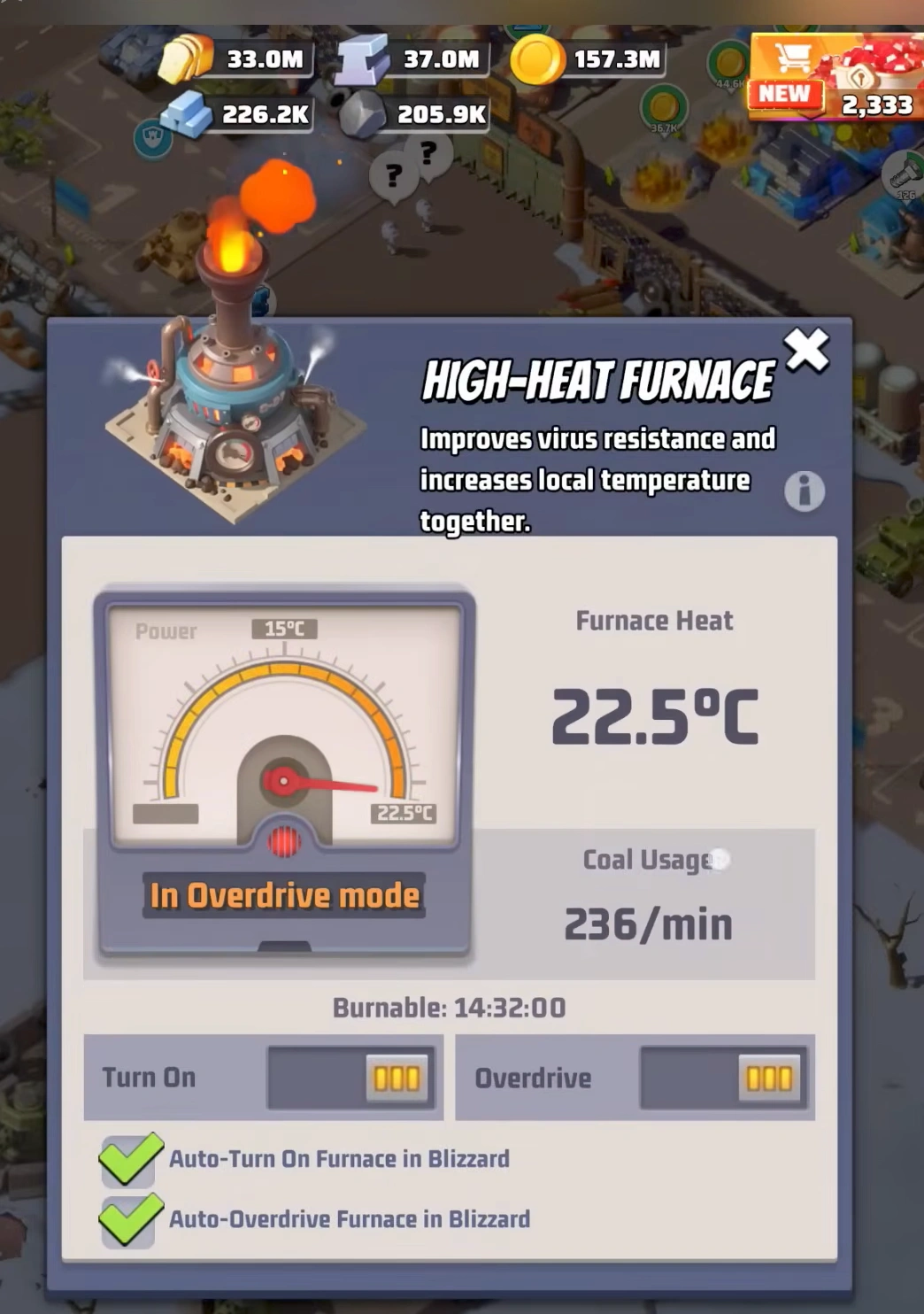
The High-heat Furnace is the centerpiece of Season 2. It protects your base from freezing by increasing local temperature, and it also provides Virus Resistance, which becomes a mandatory combat stat for Dig Sites, Cities, Polar Zombies, and Doom Elites.
This means Furnace upgrades are not just a comfort upgrade. They directly determine whether you can win efficiently, reduce incoming damage, and avoid heavy troop losses. Overdrive Mode adds another layer of control by consuming extra Coal to raise your temperature significantly, which can be the difference between stable progression and entering a frozen state during bad conditions.
- Upgrade the High-heat Furnace early because it drives both survival and combat performance.
- Treat Virus Resistance as a required threshold before challenging stronger content.
- Use Overdrive Mode deliberately when temperature pressure is more dangerous than Coal spending.
Titanium Alloy Factories and Early Upgrade Planning
Week 1 also introduces Titanium Alloy Factories, which are essential for building a dependable alloy economy. You can own up to 5 factories, but the unlock path matters because the first 4 come from upgrading previous factories to Level 15, while the 5th is tied to the Premium Weekly Pass.
This makes planning important for spenders and free-to-play players alike. If you buy the Weekly Pass for the extra factory, remember that this slot is tied to the pass duration. Temporary progression can still be valuable, but you should avoid treating that bonus factory as permanent unless you plan to keep renewing it.
- Aim to unlock the first 4 factories through normal progression.
- Understand that the 5th factory from the Weekly Pass is a paid advantage, not a default unlock.
- Do not overcommit resources into temporary pass-based value without a follow-up plan.
Purge Action and Polar Monster Combat Rules
The Purge Action in Season 2 ranks players by the highest-level Polar Zombies and Doom Elites they defeat. The problem is that these enemies are much less forgiving than early Season 1 content, so brute force approaches often turn into expensive mistakes.
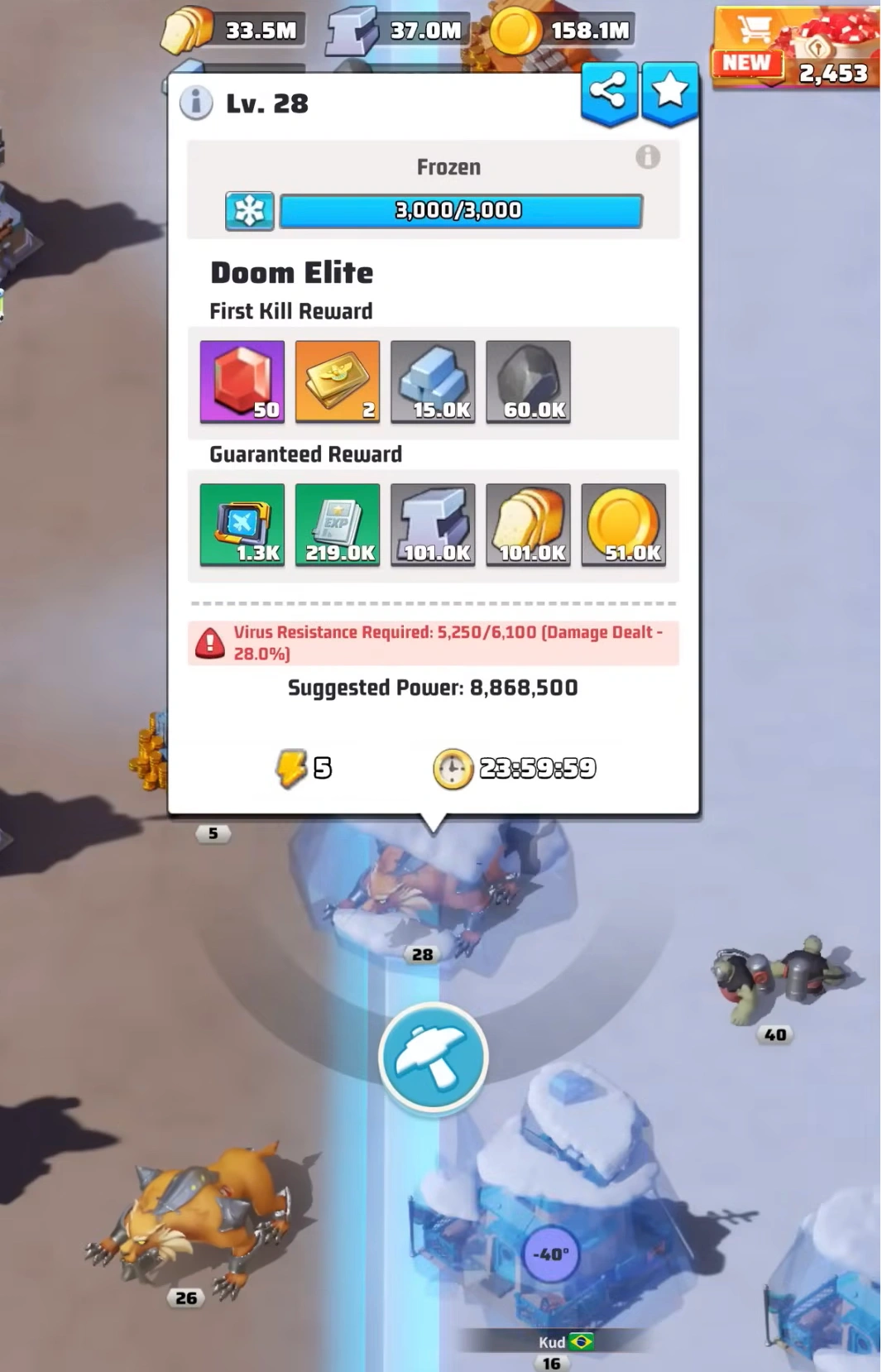
The golden rule is simple: never attack if your Virus Resistance is too low. If your resistance does not meet the required threshold, you will lose fights and suffer severe troop losses. Doom Elites are especially attractive because they provide large Coal and Titanium Alloy rewards, but they are also dangerous enough that weak players should avoid solo attempts.
If your account cannot safely clear a Doom Elite alone, joining an alliance rally led by a stronger teammate is often the best workaround. You may still take minor losses, but you can secure milestone rewards and valuable Titanium Alloy without needing to hard-force a failed solo attack.
- Never force PvE fights when your Virus Resistance is below the requirement.
- Use Doom Elites for major reward spikes, but respect their stat checks.
- Join stronger alliance rallies if you need first-kill value before your own resistance catches up.
Thermal Map and World Map Changes
Season 2 redesigns the world map around temperature bands and expansion lanes. Alliances no longer spawn near cities. Instead, they begin near the map edges and must push inward toward the center while managing colder and colder territory.
The Thermal Map layer helps visualize this pressure. Outer zones begin around minus 15 degrees Celsius, and temperatures become more brutal as you move diagonally toward the Nuclear Furnace, eventually dropping as low as minus 80. Sending troops into these extreme zones for gathering or combat can temporarily reduce your local base temperature, so map movement is no longer just a marching-time decision.
You also need to understand tile logic. Cities occupy building tiles, while empty circular tiles are Dig Sites. These alternate across the grid, and your alliance can only target locations connected to tiles you already control, which makes pathing and capture order strategically important.
- Use the Thermal Map before long marches so you do not destabilize your base by accident.
- Expect colder central zones to create both combat and logistics pressure.
- Plan tile connections carefully because expansion is limited by captured adjacency.
How to Survive Blizzards Without Freezing
Blizzards are temporary server-wide weather events that sharply reduce temperatures for several hours. If your base temperature falls below minus 20 degrees Celsius, your base enters a Frozen State. After a short countdown, you lose important actions like initiating rallies or using advanced teleporters.
The most reliable answer is preparing your furnace settings before the blizzard hits. You can manually activate Overdrive Mode to recover temperature, and you can also ask allies for warming assistance if your base is already in danger. The strongest preventive habit is enabling automatic furnace responses inside the High-heat Furnace interface so your base protects itself while you are offline.
- Frozen State blocks important actions, so prevention is much better than recovery.
- Turn on the furnace automation options for Blizzard response whenever possible.
- Remember to manually disable Overdrive after the blizzard ends if Coal efficiency matters.
Season Contributions and Mutual Assistance
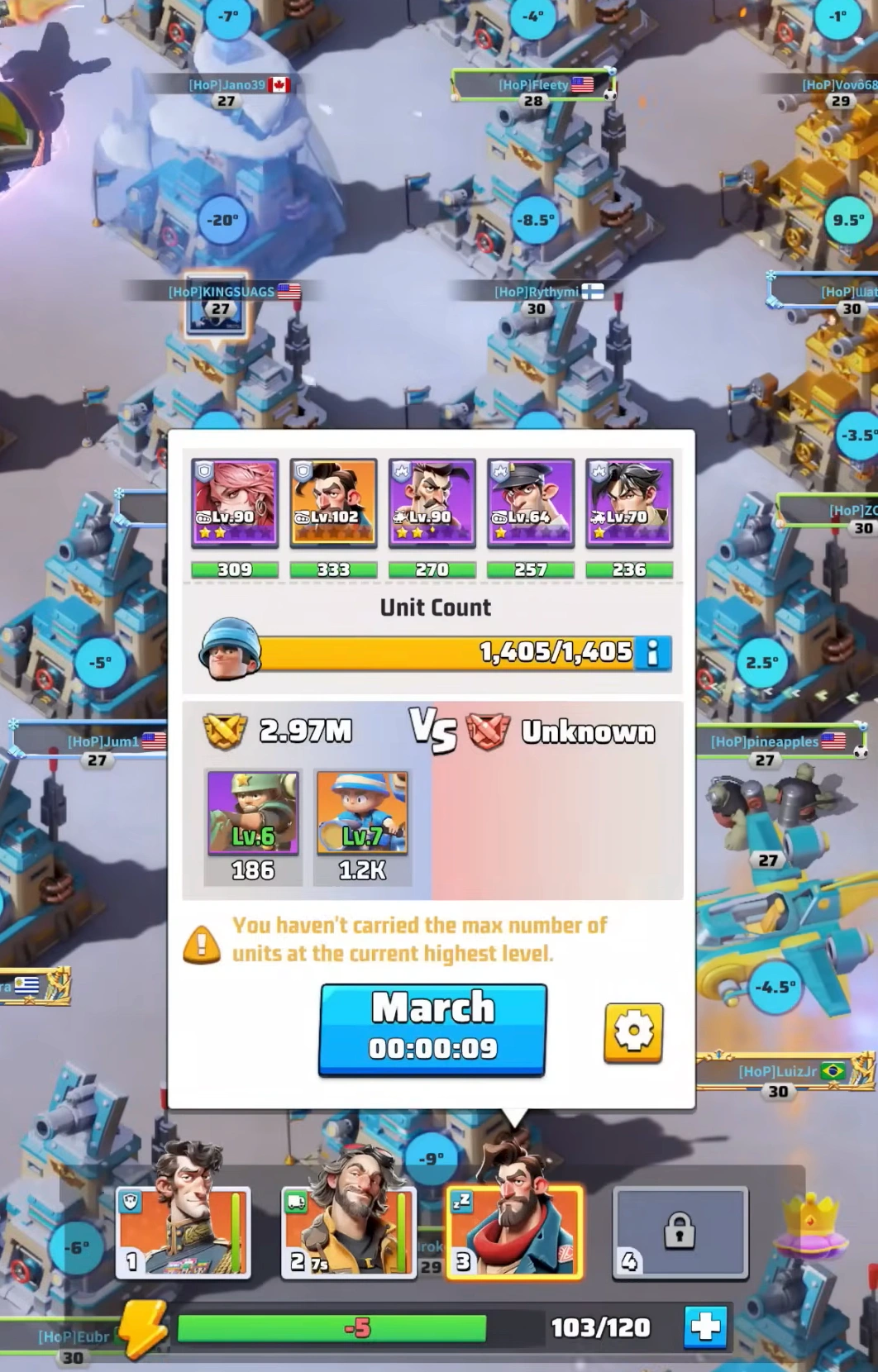
Alliance cooperation is mandatory in Season 2 because temperature support and progression rewards are deeply shared systems. R4 and R5 leaders receive Alliance Loot boxes from captured cities and often distribute those based on contribution quality, so being active in Week 1 has both immediate and long-term value.
Mutual Assistance is one of the fastest ways to build contribution points. You can warm up allies by sending support to their base, donate Coal to the Alliance Furnace multiple times per day, and unfreeze allies by dispatching troops to break the ice. These actions are not glamorous, but they help determine how effectively your alliance survives harsh weather and keeps its frontline active.
- Warm up allies to stabilize the alliance during cold pressure.
- Donate Coal regularly because it supports both temperature control and contribution growth.
- Respond quickly to frozen allies so your alliance does not lose map tempo.
Dig Sites, City Captures, and Expansion Priorities
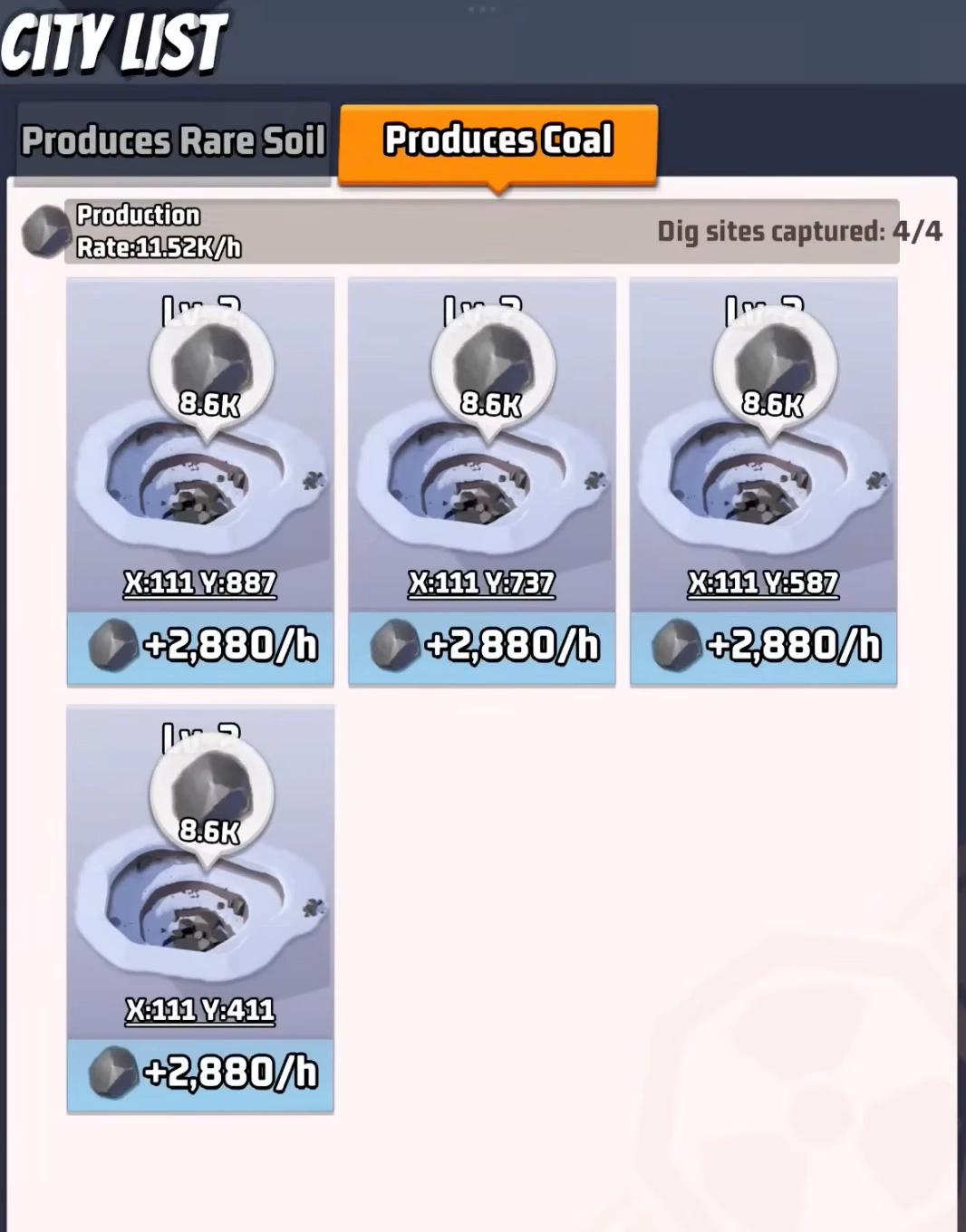
Your alliance can hold up to 6 Cities and 4 Dig Sites, so capture order matters from the start. Dig Sites are especially valuable because they generate passive Coal for every alliance member, while Cities provide major first-capture rewards and stronger global buffs like gathering speed and resource production.
A common mistake is forgetting that Dig Site Coal must be claimed manually. Players who ignore this leave value sitting in the alliance system every day. Another important rule is that alliances must first secure a Level 1 Dig Site before expanding into Cities, which means Week 1 success depends on disciplined route planning rather than random aggression.
- Claim Dig Site Coal manually through the alliance interface every day.
- Use Dig Sites to establish a stable Coal base for the whole alliance.
- Treat early City captures as strategic milestones because they unlock major bonuses.
Weekly Pass vs. Season Battle Pass
For spenders, Week 1 also raises an important efficiency question: the Weekly Pass and the Season Battle Pass offer different value profiles. The Season Battle Pass is better for broad long-term progression, offering Coal, Profession EXP, skill points, and Hero Return Tickets across milestone rewards.
The Weekly Pass offers more immediate tactical value through daily stamina, Coal, an extra Titanium Alloy Factory, and a flat Virus Resistance boost. That can create a strong opening advantage, but the temporary nature of the Weekly Pass means you should be careful about overinvesting in benefits that disappear if you do not renew it.
- Choose the Season Battle Pass for steadier long-term progression value.
- Choose the Weekly Pass if you want immediate Week 1 acceleration and a faster Furnace pace.
- Be careful with temporary pass value, especially the bonus factory.
Final Week 1 Strategy for Polar Storm
Season 2 Week 1 is all about building a stable thermal and resource foundation before the map gets harsher. Players who prioritize Coal discipline, Furnace upgrades, Virus Resistance checks, and alliance assistance will scale far more smoothly than players who waste troops forcing fights they are not ready to win.
If you want a simple rule set for the opening week, it is this: keep the High-heat Furnace advancing, protect your Titanium Alloy income, respect the Thermal Map, automate blizzard defense, and stay useful to your alliance every day. That combination sets up the rest of Polar Storm much better than chasing isolated wins.
- Center your Week 1 progression around the High-heat Furnace.
- Avoid low-resistance fights that trade short-term action for long-term losses.
- Use alliance coordination as a progression multiplier, not just a social feature.
Keep reading
More Season 2 guides
Previous guide
Season 2 Guide
The complete Last War Survival Season 2 mega-guide: temperature survival and freeze rules, every heat source, High-heat Furnace and Titanium Alloy Factory data tables, Dig Site and City capture rules, the level unlock schedule, Mutant Beast counters, Rare Soil War phases and the Warlord Missile, the faction system, Nuclear Furnace, Glacieradon hunts, hero and exclusive weapon timelines, and the full Week 1 to Week 8 roadmap.
Next guide
Season 2 Week 2 Guide
A complete Last War Season 2 Week 2 guide covering Polar Dishes ingredient strategy, Beast Crisis furnace defense, Coal and Titanium Alloy rewards, and the best use of Level Swap tickets.