
Season 1 Guide
Last War Season 1 Ghost Ops Guide: Best Launch, Join, Volunteer, and Plunder Strategy After Day 60
A detailed Last War Season 1 Ghost Ops guide covering unlock timing, Thursday time slots, SSR versus UR versus UR* mission value, participation limits, plundering, and the best way to farm hero and weapon fragments after Day 60.
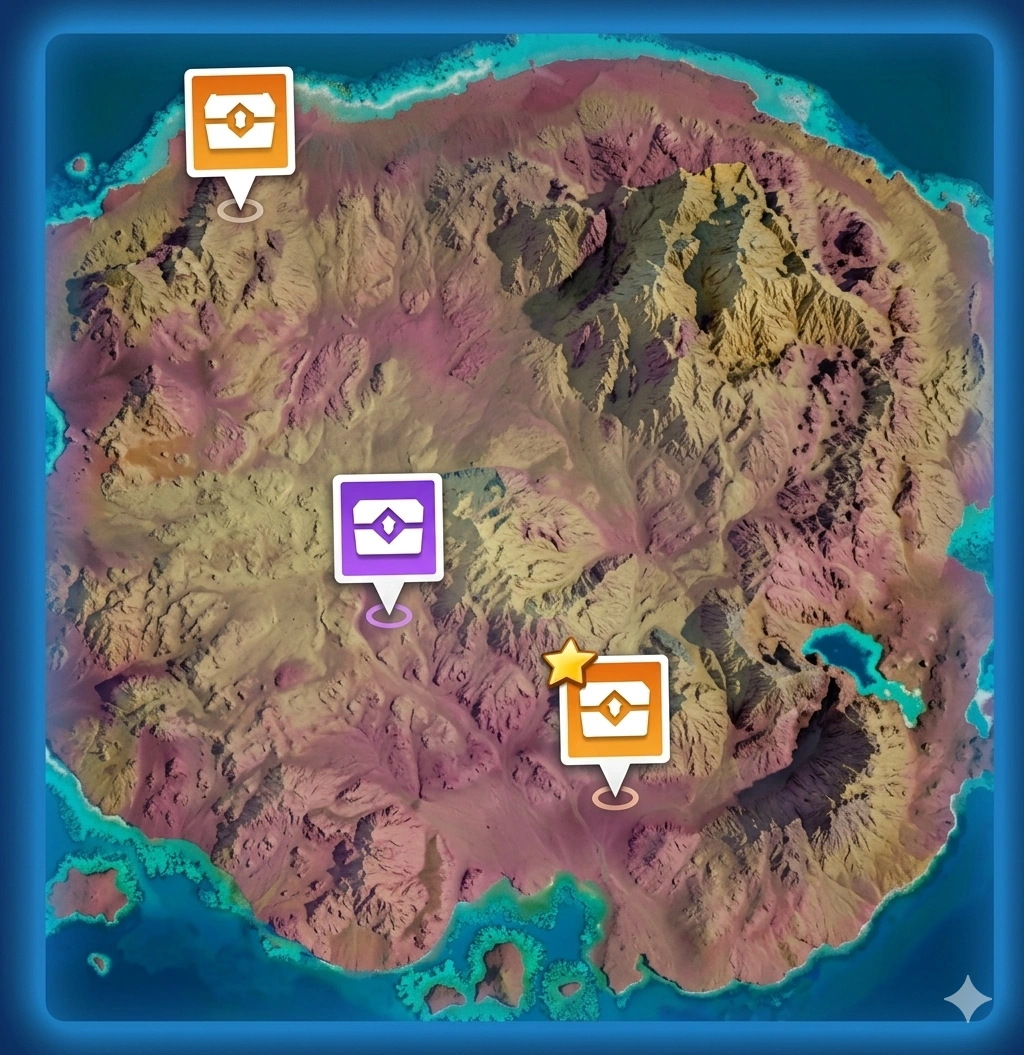
Ghost Ops is one of the best late Season 1 value events because it turns a single weekly activity into a steady source of named hero fragments, exclusive weapon fragments, drone parts, and premium support loot. In active alliances, it is less a side event and more a weekly shard funnel for players who know which missions deserve real attention.
The problem is that Ghost Ops looks simpler than it really is. Some missions are fast, low-value cleanup. Others are premium fragment runs that can justify alliance coordination, delayed launches, and careful use of your limited `Join` attempts. If you play Ghost Ops like a generic click-and-go event, you leave a surprising amount of value on the table.
Key takeaways
- Ghost Ops unlocks starting on Season 1 Day 60 during the Off-Season and is accessed through the Secret Command Post.
- The event runs every Thursday in four 3-hour windows, and each window offers three available missions with no activity outside those slots.
- UR* missions are the premium targets because they can reward named hero fragments, exclusive weapon fragments, and drone parts, but they should only be launched when all conditions are met.
- Your weekly efficiency depends on using `Join` attempts carefully, volunteering freely when appropriate, and claiming finished rewards quickly before plunder happens.
Profession quick pick
Engineer
Best for most players
Choose Engineer if your focus is efficient growth, better upgrade pacing, and stronger long-term account value.
- F2P friendly
- Better resource efficiency
- Useful alliance support value
War Leader
Best for aggressive PvP
Choose War Leader if you plan to lead rallies, fight constantly, and trade long-term efficiency for stronger combat impact.
- Better for whales and rally leads
- Stronger offensive pressure
- Higher value in active war play
1. What Ghost Ops Is and Why It Matters After Day 60
Ghost Ops unlocks starting on Day 60 of Season 1 during the Off-Season, and the event is tied to the Secret Command Post. In practical terms, that makes it a post-progression activity designed to keep accounts growing after the earlier Season 1 map and virus milestones are already familiar.
What makes Ghost Ops worth caring about is the reward quality. The best missions can reward named hero fragments, exclusive weapon fragments, and even drone parts, which immediately puts Ghost Ops above ordinary filler content. Lower-tier runs still offer premium or basic resources, but the real value comes from recognizing which missions deserve coordination and which ones are just fast cleanup.
That reward spread creates a simple truth: Ghost Ops is not equally valuable every time you click. The entire event revolves around identifying which missions deserve coordination and which ones should be cleared quickly with minimal attention.
- Ghost Ops becomes available from the Secret Command Post after Season 1 Day 60.
- It is an Off-Season activity, not an early or mid-season system.
- The best missions can reward named hero shards and exclusive weapon fragments.
- Mission quality varies enough that selective play is much better than random play.
2. Schedule, Time Windows, and Entry Requirements
Ghost Ops is tightly scheduled. The event appears every Thursday, and each active window lasts 3 hours. Most tasks take around 30 to 55 minutes, so you cannot assume there is room for sloppy timing at the end of a slot.
The event also has a clear access floor. You need Base Level 18 or higher, the missions are cross-server, and alliance teamwork is recommended even though solo completion is technically possible. That last point matters because 'possible' is not the same as 'optimal.' The event is clearly designed around shared condition matching and better team rewards.
- Do not start a mission if the remaining window is too short for a safe finish.
- Treat the four Thursday windows like scheduled alliance content, not casual background farming.
- If your alliance is usually inactive in one slot, plan around the windows where your required heroes are most likely to be online.
| Rule | Ghost Ops Detail |
|---|---|
| Availability | Every Thursday |
| Active windows | 00:00-03:00, 06:00-09:00, 12:00-15:00, 18:00-21:00 server time |
| Average task duration | 30-55 minutes |
| Mission count | Three missions available per active window |
| Outside active windows | No missions available |
| Minimum requirement | Base Level 18 or higher |
| Mode | Cross-server missions |
| Playstyle | Alliance teamwork recommended; solo possible with reduced rewards |
3. The Three Daily Profit Actions: Launch, Support, and Plunder
Ghost Ops gives you three distinct ways to create value in a single day. First, you launch your own missions. Second, you support other players' missions. Third, you can plunder completed missions. That means the event is not just about what appears in your own panel. It is also about how well you respond to what your alliance and the wider cross-server pool make available.
The key is that each action has a hard limit or a quality filter. Launches are limited, rewarded joins are limited, and plunders are limited. Because of that, efficient players do not spend premium attempts on low-value targets early unless they already know better options will not appear later in the day.
- There is no mission refresh, so judgment matters more than reroll luck.
- Your three rewarded joins are usually more important than your lower-value launches.
- Plunder capacity exists, but it should be used selectively rather than emotionally.
| Objective | Daily Limit | Best Use |
|---|---|---|
| Launch missions | Up to 3 missions per day with no refresh | Use on the highest-value missions you can actually complete with the right conditions. |
| Support allies | Up to 3 rewarded participations per day | Spend rewarded joins only on strong missions with rewards you genuinely want. |
| Additional support | Unlimited for Alliance Contribution only | Use volunteering to help allies meet conditions without burning your premium joins. |
| Plunder missions | Up to 5 plunders per day | Prioritize high-value Legendary or UR-style targets instead of random scraps. |
4. Mission Types Explained: UR*, UR, and SSR
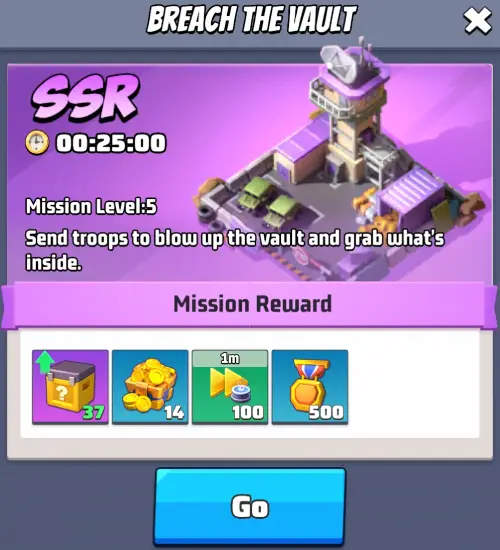
Ghost Ops has three broad mission classes, and understanding that hierarchy is the foundation of good weekly play. At the top are `UR*` missions, which can reward named hero fragments, exclusive weapon fragments, and drone parts. These are the missions that justify alliance chat, condition checking, and careful join management.
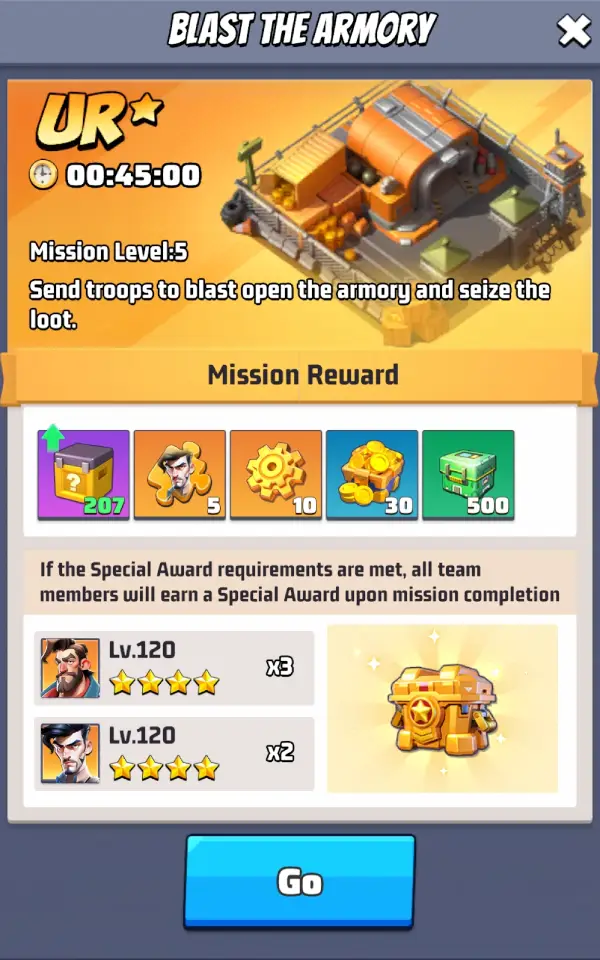
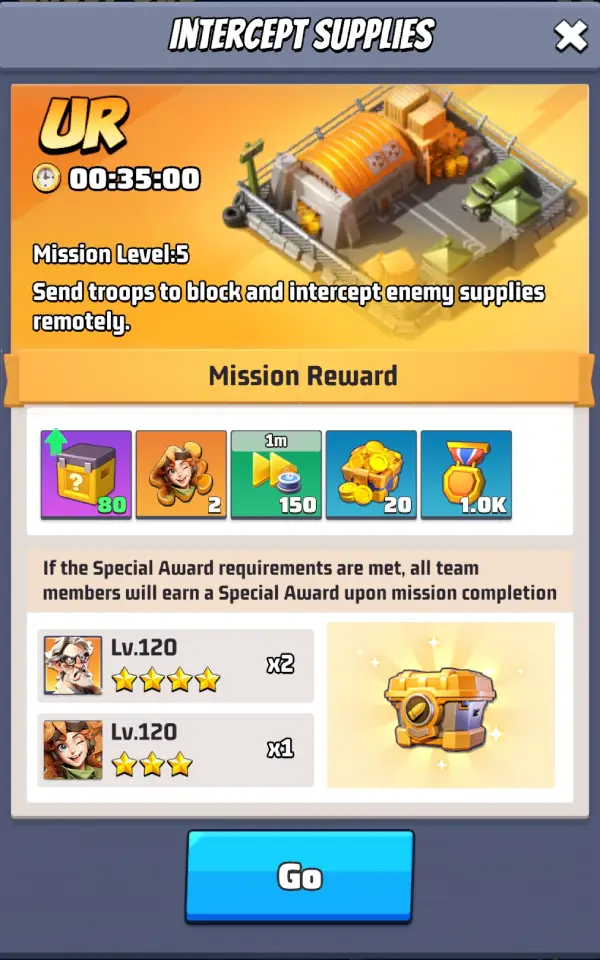
Standard `UR` missions still matter, but they are not automatically equal to starred UR missions. A normal UR mission can still offer named hero fragments, speedups, coins, and medals, but the truly premium value comes from the combination of stronger base rewards and a better special chest when the conditions are met.
SSR missions sit at the bottom of the value ladder. Their rewards are lighter, their value ceiling is lower, and that is why SSR missions are usually best treated as quick execution content rather than alliance-priority content.
- Not every UR mission deserves the same urgency as a starred UR mission.
- UR* is where your best joins usually belong.
- SSR missions are fine for cleanup, but they are usually not worth alliance chat spam.
| Mission Type | Main Rewards | Practical Priority |
|---|---|---|
| UR* | Named Hero Fragments, Exclusive Weapon Fragments, Drone Parts | Top priority. Share and coordinate these whenever conditions can be met cleanly. |
| UR | Exclusive Weapon Fragments, Premium Resources | Good value, especially when requirements are realistic for the players currently online. |
| SSR | Basic Resources, Small Fragments | Low priority. Usually best for immediate execution instead of alliance-wide attention. |
5. Mission Conditions Matter More Than the Mission Label
Ghost Ops does not reward teams just for clicking into a premium mission. The listed conditions are the real reward multiplier. If every condition is met, the entire team gets increased rewards, including the base reward package plus a bonus chest with 10 additional rewards.
That is the core rule of the entire event: the best rewards are locked behind the correct hero lineup and progression thresholds. If you ignore the requirements, you are choosing to turn a premium mission into a reduced-value mission.
If the mission is launched without meeting the conditions, everyone receives reduced rewards and only the basic reward set. That is why a badly launched UR* mission can be less efficient than a properly coordinated lower-tier mission. The mission label alone is never enough. Condition completion is the real threshold between premium value and wasted potential.
- Meeting all conditions increases rewards for the whole team, not just the owner.
- Ignoring conditions turns premium-looking missions into basic reward runs.
- Condition checking should happen before launch, not after people have already joined.
| Mission Class | Condition Style | Why It Matters |
|---|---|---|
| UR* | Specific hero presence | These missions appear to require named hero matching, so missing the right hero can destroy top-end value. |
| UR | Required hero level or rank | Good missions can still fall short if the required progression thresholds are not present. |
| SSR | Minimum team member requirements | Even low-tier missions can lose value if the listed participation conditions are ignored. |
6. How to Launch Missions Without Wasting Your Best Opportunities
`UR*` missions should be shared, and they should be launched only when all conditions are met and five players are present. That is the clearest signal in the whole event that top-tier missions are alliance operations, not solo speedruns.
Normal UR missions are more flexible. These missions can still contain named hero fragments and a special reward chest, so they are worth waiting for if the right heroes are about to log in. But they are not always worth freezing your whole alliance around the way a clean UR* launch is.
There is also an important distinction for `UR Lv. 4-5` missions. These should still wait for the required heroes before launch, but they can be executed without a full five-player lineup. That gives you more flexibility on strong but not absolute-premium runs.
If you are staring at a UR mission with no participants, the recommended response is not blind patience. Cancel and relaunch after 1 hour or use the next slot instead. On the other hand, `SSR` missions should usually be executed immediately and not pushed into alliance chat, because their value is too low to justify crowding out better calls.
- Share UR* missions and launch only when the required heroes and five players are ready.
- For UR Lv. 4-5 missions, wait for the right heroes first, then launch even if the lobby is not fully packed.
- If a UR mission gets no traction, cancel and relaunch later instead of locking yourself into weak participation.
- Use `Execute Now` on SSR missions and keep alliance chat focused on premium value.
- Always leave enough time in the current 3-hour window for task completion.
7. How Join and Volunteer Attempts Really Work
Participation discipline is where many players quietly lose value. In Ghost Ops, `Join` consumes one of your rewarded participation attempts, and you can use it only three times per day. In exchange, you receive the same rewards as the mission owner. That makes `Join` your premium currency inside the event.
By contrast, `Volunteer` does not consume those attempts. It is mainly a support tool for helping other players meet mission conditions or complete runs without sacrificing your own best reward opportunities. If you already own all heroes and are not chasing a specific named fragment, `Volunteer` is often the smarter default action.
- Think of `Join` as a scarce daily resource, not a generic assist button.
- Use `Volunteer` freely when the mission is useful to the alliance but not worth one of your three premium joins.
- Condition-matching help is often more valuable than random extra participation.
| Action | Attempt Cost | Reward Value | Best Use |
|---|---|---|---|
| Join | Consumes 1 of 3 rewarded participations | Same rewards as the mission owner | Use on premium missions you truly want, especially UR* fragment targets. |
| Volunteer | No rewarded attempt cost | Support-focused; useful for Alliance Contribution and condition matching | Use to help allies without weakening your own high-value join economy. |
8. Best Strategy for Hero Hunters vs Fully Built Accounts
There are two very different play patterns depending on what your account actually needs. If you already own all heroes, the recommended approach is simple: volunteer on most missions, save `Join` for the best `UR*` runs, and if no premium value appears early, spend your joins later in the third or fourth time slot instead of throwing them away on weak runs.
If you are chasing a specific hero, the logic changes. You should inspect the reward icon before joining and spend `Join` attempts only on missions that can drop the named fragments you actually want. Before you spend one of your three rewarded joins, check whether the visible fragment reward and the special chest value actually match your goal.
There is also a broader optimization rule hidden in the tips: if hero fragments are not your priority, you can mostly follow the full-roster strategy. In other words, save your premium joins for the missions that produce the biggest expected value rather than the earliest available value.
- Full-roster accounts should lean heavily on `Volunteer` and preserve `Join` for the best starred missions.
- Hero hunters should check the reward chest first and join only the missions that can drop the fragments they want.
- If nothing valuable appears early, waiting for later slots is often smarter than spending joins on mediocre missions.
- Active alliance communication increases the odds that the right people are online for the right missions.
9. Plunder Risk, Reward Claiming, and Why Fast Collection Matters
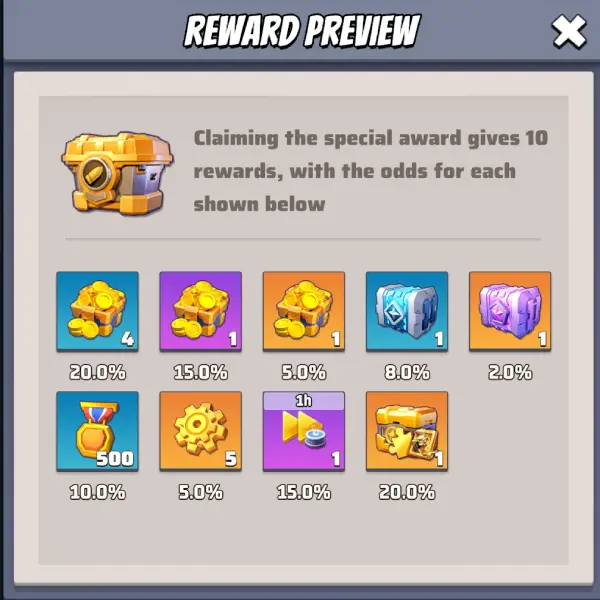
Ghost Ops includes an important anti-greed warning: rewards must be claimed by the player personally at the Secret Command Post before the finished task gets plundered. That means even a well-run mission can lose value if the owner gets careless after completion.
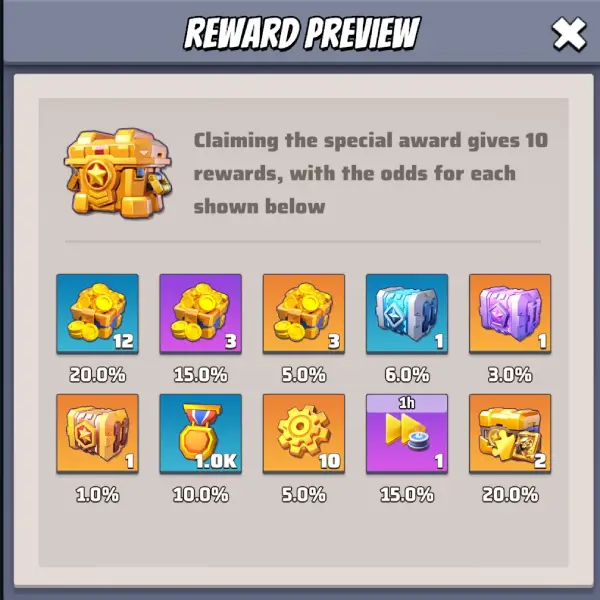
Premium UR and UR* chests can contain a meaningful spread of value: coins, medals, gear parts, speedups, upgrade crates, and rarer utility items. Once a mission is carrying that kind of chest, it becomes a much more attractive target.
You can plunder up to five times per day, and the best use of those attempts is to target Legendary or top-end UR-style missions. The practical lesson is simple. Premium missions attract attention, so if you launch or join high-value content, you should also be ready to collect quickly.
This turns reward claiming into part of the strategy rather than an afterthought. Efficient players do not just optimize the launch. They optimize the full loop from condition matching to mission completion to fast collection.
- Claim finished rewards yourself at the Secret Command Post as soon as the task is done.
- Do not leave premium mission rewards sitting idle where they can be plundered.
- Use your five daily plunders on the most valuable targets you can find, not random low-end leftovers.
10. Common Mistakes and the Final Ghost Ops Checklist
Most Ghost Ops mistakes come from impatience. Players launch starred missions before the required heroes are online, burn all three joins on weak missions in the first slot, share low-value SSR runs in alliance chat, or forget to collect finished rewards before plunder happens. None of those mistakes are mechanical. They are all decision-making mistakes.
The strongest Ghost Ops routine is disciplined and repetitive. Show up for the best Thursday slots, check conditions before launch, protect your three rewarded joins, use volunteering to help allies, and treat premium missions like alliance resources rather than private clicks. In active alliances, that kind of coordination can accelerate hero fragment progress dramatically, and a couple of strong starred joins can be worth more than a full day of random low-tier participation.
- Check the current time slot first and make sure the mission can finish inside the active window.
- Prioritize UR* missions only when the listed conditions can actually be satisfied.
- Check the reward preview before joining when you are targeting specific fragments or higher-value chest odds.
- Use rewarded `Join` attempts on premium missions, not convenience missions.
- Use `Volunteer` to help allies without burning your own best daily value.
- Execute SSR missions directly and avoid cluttering alliance chat with low-value calls.
- Cancel stalled UR missions and relaunch later instead of forcing bad participation.
- Claim rewards quickly before plunder becomes a problem.
Keep reading
More Season 1 guides
Previous guide
City Clash S1 Guide
A complete City Clash S1 roadmap covering pathfinding, city unlock timing, war declaration limits, Lv.6 expansion power, and the final Lv.7 Capital battle.
Next guide
LastWar Season1 Quick Guide
A complete Season 1 guide to the virus system, new resource loop, Virus Resistance, map conquest rules, and the path toward the City of Apocalypse.